Are the Terrace Houses of Ephesus worth visiting?
By Mutlu Bulut | Licensed tour guide in Turkey since 2007
Are the Terrace Houses of Ephesus Worth Visiting?
Yes. In my experience as an Ephesus guide, the Terrace Houses are worth the extra time and admission fee if you enjoy archaeology, ancient art, or discovering how people lived. Their mosaics, wall paintings, and courtyards give you a close look at the homes of wealthy residents of Roman Ephesus.
I often recommend including them in a visit to Ephesus. Some of my guests have even returned specifically to see the Terrace Houses after missing them on an earlier trip. If this may be your only visit, I think they deserve a place in your plans.
What Are the Terrace Houses of Ephesus?
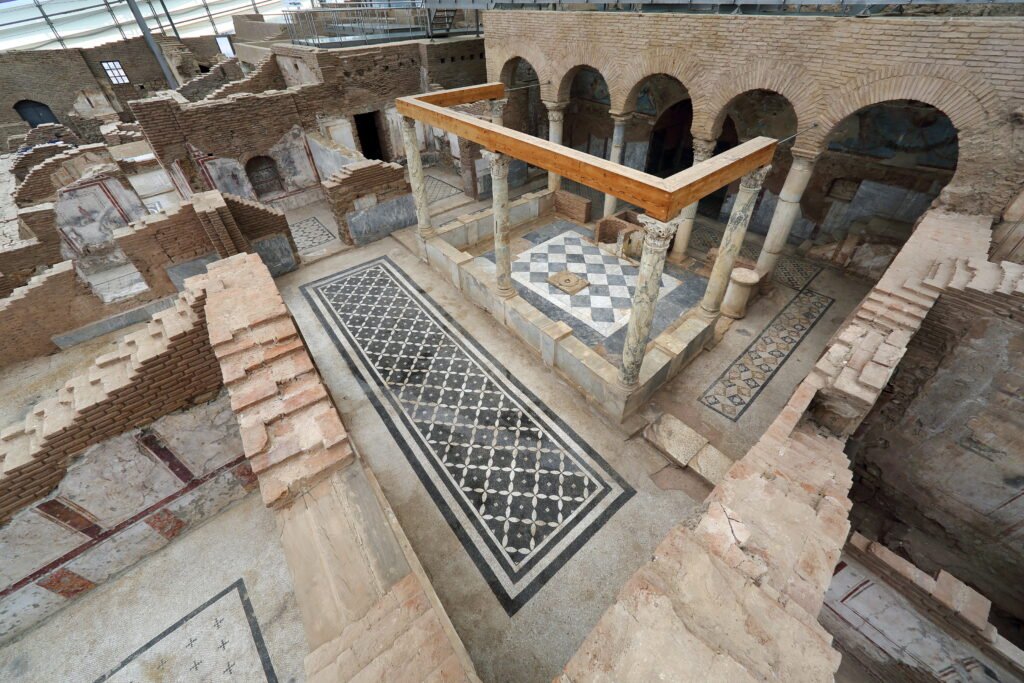
The Terrace Houses are Roman-era homes inside the ancient city of Ephesus, near Selçuk in western Turkey. The covered complex open to visitors is known as Terrace House 2, or Hanghaus 2. It contains seven homes, or residential units, built on terraces along the hillside.
The homes took shape in the first century AD and were remodeled over generations. Many rooms opened onto a courtyard surrounded by columns, with additional living space upstairs. Most upper floors no longer survive, but the courtyards and rooms below still reveal the layout of these large homes. A series of earthquakes in the later third century AD caused extensive damage to the complex.
What Can You See Inside the Terrace Houses?
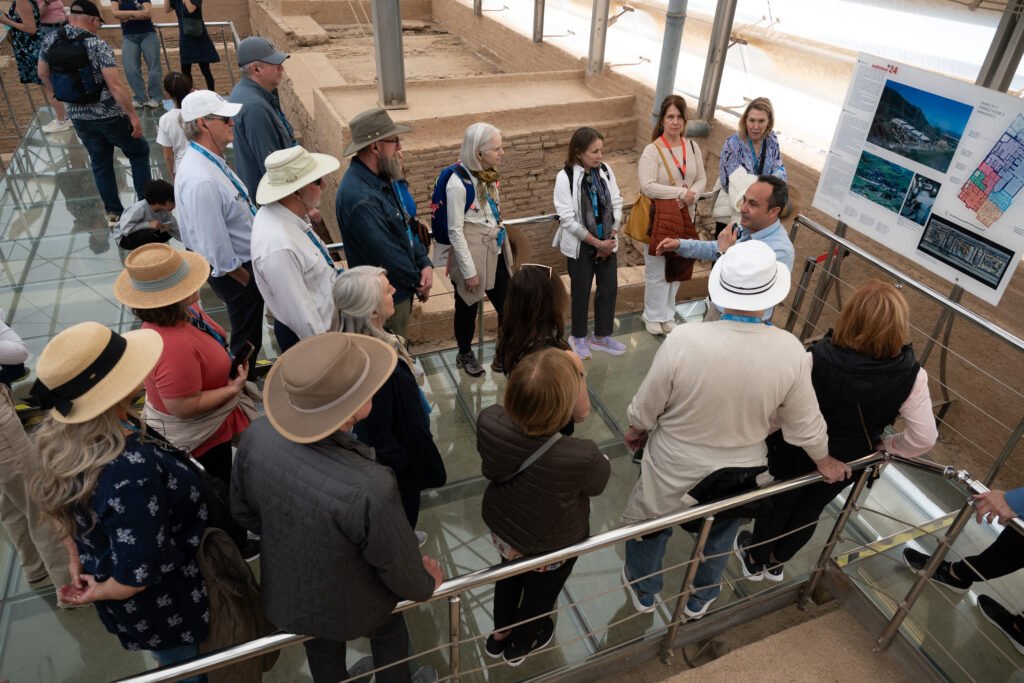
The main highlights are the mosaic floors, painted walls, marble decoration, and columned courtyards. Raised walkways let you look down into the rooms and see how the different spaces fit together. Reception rooms and dining halls show how much attention wealthy homeowners gave to welcoming and impressing their guests.
I particularly enjoy the geometric mosaics. Their repeating patterns can look almost like woven rugs. The wall paintings, often called frescoes, also retain remarkably vivid colors in places. Some walls preserve several layers of painting, showing how the rooms were redecorated over time. I sometimes compare these layers to wallpaper: a new design was applied over an older one as tastes changed or repairs became necessary.
Who Lived in the Terrace Houses?
Rich Romans? Yes, that’s right. But who were they? Let me tell you about one of them.
During excavations in Unit 6 of the Terrace Houses, archaeologists found Greek inscriptions carved into marble. These inscriptions gave us the name of one of the homeowners: **Gaius Flavius Furius Aptus**. They also tell us that he was a priest of Dionysus, the ancient Greek god of wine and theater.
For me, knowing his name makes visiting this house even more interesting. When we walk through these rooms today, we know something about the person who once called this place home.
Aptus was a priest of Dionysus and also held a high public office. A Greek inscription on the marble railing around the courtyard fountain in Unit 6 names him and identifies his priesthood. Elisabeth Rathmayr gives this English translation in her study of the houses:
“Dionysos Oreios Bakchios outside the town, whose priest is Gaius Flavius Furius Aptus.”
Inscription from Unit 6. Photograph published in Thür and Rathmayr, eds., Hanghaus 2 in Ephesos, Wohneinheit 6 (2014), Plate 126. The red annotation identifies the verb on the second line.
In the photograph, the marked word ΙΕΡΑΤΑΙ means “serves as priest.” Aptus’s name follows immediately after it. Details like this make the houses especially interesting to me: we can connect a surviving room with a person who once lived there.
You can read the discussion and English translation in Rathmayr’s study, pages 135–136. You’ll also find old photos of the Terrace Houses and the artifacts discovered there, showing what they looked like when archaeologists first uncovered them.
Are the Terrace Houses Included in the Ephesus Entrance Ticket?
No. The standard Ephesus admission ticket does not include the Terrace Houses. As of November 2026, the additional admission fee is €15 for international adult visitors. If you buy a combined ticket or book a tour, check whether Terrace Houses admission is included.
The entrance is inside Ephesus on Curetes Street, close to the Library of Celsus. There is a ticket office at the Terrace Houses entrance, where you can pay by credit card. Ticket prices and arrangements can change, so confirm the details before your visit.
How Long Does It Take to Visit the Terrace Houses?
On a guided visit, I usually allow an extra 20–30 minutes for the main highlights. If my guests are particularly interested in the paintings, mosaics, or history of the houses, we may spend 45 minutes or longer inside.
This is additional time within your Ephesus visit. If you are arriving on a cruise ship in Kuşadası, let your guide know that you want to include the Terrace Houses so there is enough time in the day’s schedule. Your interests, walking pace, and time in port should shape the plan.
How Difficult Is the Walk Through the Terrace Houses?
The visitor route includes raised walkways and several flights of stairs, so it is not a step-free visit. Viewing platforms provide places to pause while you look into the rooms.
If you are comfortable using stairs at home, the route may be manageable at a steady pace. If stairs are difficult for you, the Terrace Houses can be challenging as well. Discuss any mobility concerns with your guide before deciding to go inside, and allow more time if you need frequent pauses.
My Tips for Visiting the Ephesus Terrace Houses
Give yourself enough time to stop and look closely. The small details are often the most rewarding: a painted figure on a wall, a geometric pattern in a floor, or a name carved into marble. Wear comfortable shoes with good grip for the walk through Ephesus and the stairs inside the houses.
When comparing Ephesus shore excursions from Kuşadası, check that the Terrace Houses are actually part of the itinerary. Being taken through the main archaeological site does not automatically mean you will visit the houses.
For guests who enjoy archaeology and ancient art, I make the Terrace Houses a priority when time and mobility allow. On a private Ephesus tour, we can adjust the pace to spend longer with the details that interest you most. If you have the opportunity to visit, I recommend taking it.
Sources and Further Reading
Elisabeth Rathmayr, 2018. Sculptural Programs of Specific Residential Units of Terrace House 1 and 2 in Ephesos. See pages 135–136 for Unit 6 and the inscription’s English translation.
Helmut Schwaiger. Domestic Architecture in Ephesus from the Hellenistic Period to Late Antiquity. See page 85 for the evidence identifying the homeowners.
Austrian Archaeological Institute, 2023. A Colourful Future. An English account of the frescoes and their conservation in Terrace House 2.