
How to Plan Your Turkey Itinerary: Expert Tips from a Local Guide
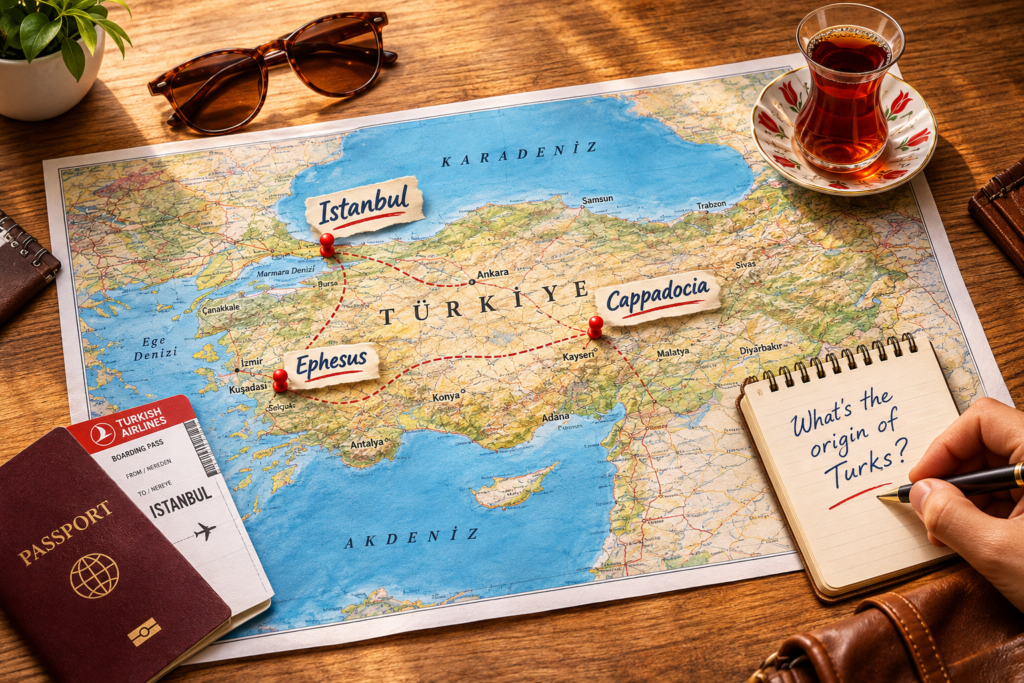
First Things First: What Do You Want From Your Trip?
Before you start planning your Turkey itinerary, ask yourself one simple question: What do I actually want from this trip?
Turkey is full of history, ancient cities, and archaeological sites. But not everyone enjoys history in the same way. Some people could spend hours among Roman ruins; others would rather sit in a Turkish coffeehouse and watch the world go by. Both are perfectly good ways to travel.
As a tour guide, I have to admit something: history can be boring if nobody tells you the interesting stories! Take Julius Caesar. He was once kidnapped by pirates who demanded 20 talents for his release. Caesar laughed and told them he was worth 50. Once freed, he organized ships at Miletus, caught the pirates, and carried out the punishment he’d threatened. That’s more memorable than another list of dates, isn’t it?
Still, even the biggest history lover might tire of visiting ruins every day. Mix the ancient cities with a farmers’ market, a village coffeehouse, or a bakery where you can watch someone prepare baklava. In my experience, these everyday moments often become a visitor’s favorite memories.
So decide what matters to you: archaeology, Biblical history, local food, scenery, relaxation—or a little of everything. The best Turkey itinerary isn’t the one with the most stops. It’s the one that suits you.
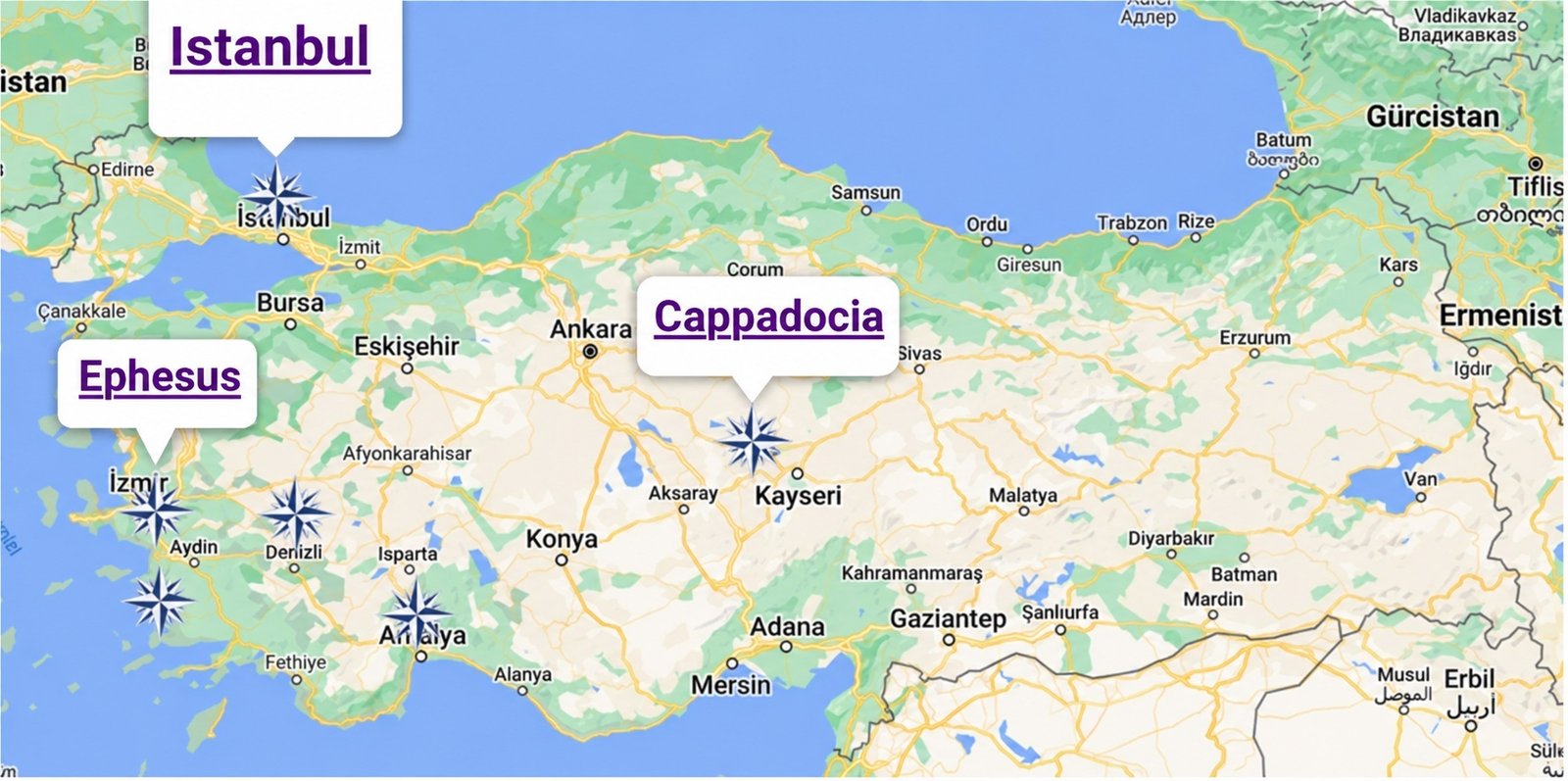
Planning your first trip to Turkey? Istanbul, Cappadocia, and Ephesus are three destinations worth including in your itinerary.
How Many Days Do You Need in Turkey?
For a first trip to Turkey, I recommend at least 10 full days if you can manage it, excluding arrival and departure days. You won’t see everything, but you can enjoy the highlights without turning your vacation into a race.
- Istanbul — 3 nights: Explore Byzantine and Ottoman history, lively bazaars, and the Bosphorus.
- Cappadocia — 3 nights: Discover fairy chimneys, cave churches, underground cities, and, weather permitting, a sunrise balloon flight.
- Ephesus and the surrounding area — 2 nights: Visit the ancient city, the Basilica of St. John and the Aegean countryside.
That gives you a starting point, with the remaining time available for travel between regions or another stop that interests you.
Have three weeks? After Istanbul, Cappadocia, and Ephesus, consider ending your trip with a week on Turkey’s Turquoise Coast aboard a traditional gulet or a private yacht. Swimming in quiet bays and enjoying a slow lunch by the sea can be a wonderful contrast to sightseeing.
My advice? Don’t try to see all of Turkey in one visit. It has been here for thousands of years; I think it can wait for your next trip!
How to Choose the Best Route Through Turkey
Before you book your hotels, check domestic flights in Turkey. The order of your destinations can make a big difference to how much time you spend traveling.
Many visitors plan Istanbul → Cappadocia → Ephesus. That can work well, but not on every date. Istanbul has plenty of domestic connections, while flights from Cappadocia to Izmir—the main airport for Ephesus—may be more limited. Cappadocia is served by Kayseri (ASR) and Nevşehir (NAV); depending on the schedule, you may find a nonstop flight from Kayseri or need to connect through Istanbul.
Check both airports before deciding whether to visit Ephesus before or after Cappadocia. A little research could save you a long connection and an unnecessary return trip through Istanbul.
Also check Turkish public holidays. During Ramadan Bayramı (Eid al-Fitr) and Kurban Bayramı (Eid al-Adha), roads, airports, and popular destinations can get busy. You can review upcoming dates at https://www.timeanddate.com/holidays/turkey
And remember, you don’t always need a flight. Turkey has good main roads, and Izmir to Bodrum, for example, is roughly a three-hour drive in normal conditions. Sometimes a scenic drive with a stop for a local lunch is the better part of the journey.
When Is the Best Time to Visit Turkey?
For most first-time visitors, I think April, May, September, and October are the best months to visit Turkey. The weather is generally comfortable for exploring Istanbul, Cappadocia, Ephesus, and Pamukkale on foot.
June can also be lovely, although temperatures begin to rise. July and August can be very hot, especially at open-air archaeological sites such as Ephesus. On the other hand, they’re excellent months if you’re dreaming of beaches and swimming in the Aegean or Mediterranean. November is quieter in some places, but expect cooler weather and a greater chance of rain.
Traveling farther east? The answer changes by region. June through September can be ideal for higher-altitude parts of Eastern Turkey, including Van and Kars. For Göbekli Tepe, Şanlıurfa, and Mardin in Southeastern Turkey, I prefer spring or autumn—the summer heat can be intense.
In short, choose your travel dates around the places you want to see, not the other way around.
Mistakes to Avoid When Planning Your Turkey Itinerary
- Trying to see too much: Packing every day with distant attractions means early starts, long drives, and very little time to enjoy where you are.
- Visiting archaeological sites nonstop: Even I love a break from ancient stones now and then. Leave room for local markets, village life, and a spontaneous stop.
- Copying someone else’s itinerary: One of my guests was fascinated by the old doors of Turkish houses, so we visited small villages where she could photograph them. That wouldn’t be on everyone’s must-see list, but it made her trip special.
A little flexibility often makes a vacation more memorable than a perfectly packed schedule.When planning your Turkey itinerary, remember that a little flexibility can make your vacation much more enjoyable.
Planning your own trip to Turkey? Feel free to drop me a message! I’m always happy to share my local knowledge and offer some free travel advice to help you make the most of your visit.