Did St. Paul really preach in the Great Theatre of Ephesus?
Did St. Paul Really Preach at the Great Theatre of Ephesus?
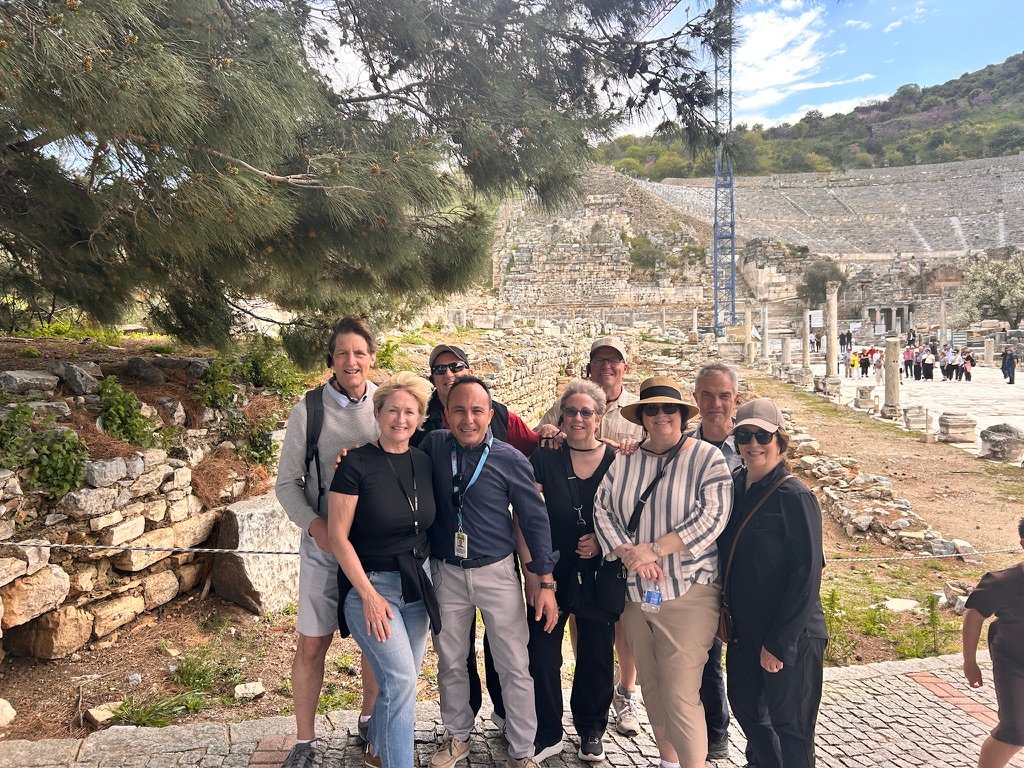
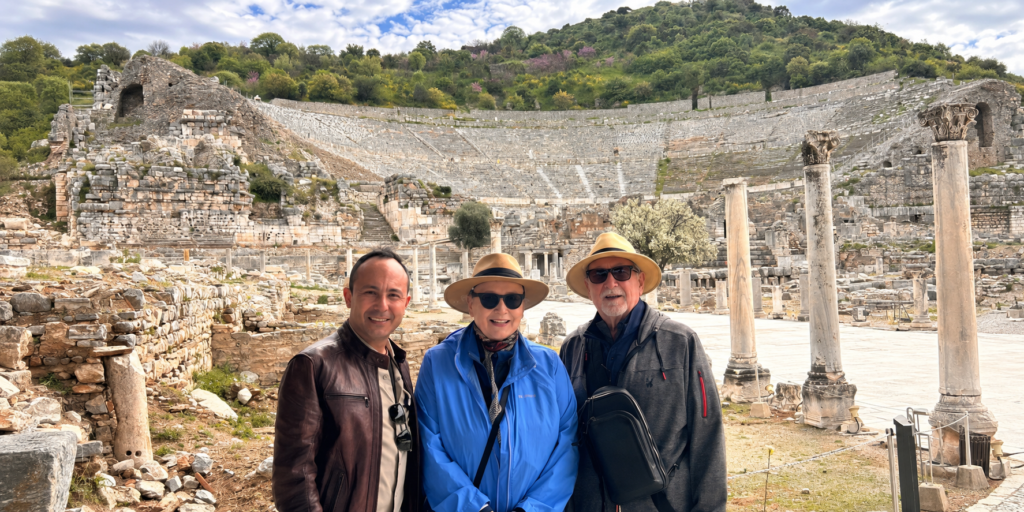
The Great Theatre of Ephesus has an important place in St. Paul’s story. But did he actually preach there?
The account in Acts 19 does not describe Paul delivering a sermon in the theatre during the famous riot. Instead, it describes him wanting to address the crowd—and his disciples preventing him from doing so. [Acts 19:29–31]
The distinction is easy to miss: the place where the crowd gathered was not necessarily the place where Paul had been teaching.
What Happened at the Great Theatre?
According to Acts, the disturbance began with Demetrius, a silversmith who made silver shrines of Artemis. He gathered fellow craftsmen and warned that Paul’s teaching threatened both their livelihood and the standing of their goddess.
As the anger spread, the crowd seized Gaius and Aristarchus, Paul’s traveling companions, and rushed into the theatre.
Then comes a crucial detail:
“Paul wanted to appear before the crowd, but the disciples would not let him.”
The following verse adds that some provincial officials who were Paul’s friends also urged him not to enter the theatre. The passage describes a dangerous confrontation, not a sermon delivered by Paul to the assembled crowd. [Acts 19:23–31, NIV]
Where Did Paul Teach in Ephesus?
Acts identifies two teaching venues.
Paul first spoke in the synagogue for three months. When some listeners opposed his message, he left and continued holding daily discussions in the lecture hall of Tyrannus. Acts says this continued for two years. [Acts 19:8–10]
The biblical text therefore gives us the name of a place associated with Paul’s regular teaching. Locating that place among the ruins of Ephesus is another matter.
Who Was Tyrannus, and Where Was His Hall?
We do not know Tyrannus’s identity with certainty. He may have owned the hall or been a teacher associated with it, but Acts does not explain his background.
The hall’s precise location also remains uncertain. Suggested locations exist, but none should be presented to visitors as firmly established. [BiblePlaces: The Lecture Hall of Tyrannus]
In his article “Archaeology and the Book of Acts,” John McRay discusses a possible lecture hall beside the eastern side of the Celsus Library. He presents its connection with Tyrannus as a possibility, not a confirmed identification. [McRay, *Criswell Theological Review* 5/1, 1990, pp. 80–81]
This does not mean Paul taught inside the Celsus Library. The library was built in the second century AD, after Paul’s lifetime. Any connection would have to concern an earlier building or use of the surrounding area. [Austrian Academy of Sciences]
What Can We Conclude?
These verses cannot prove that Paul never entered or spoke in the theatre on another occasion. They describe one particular incident.
But for that incident, the distinction is clear: Acts places the angry crowd in the theatre and describes Paul being prevented from addressing it. His daily teaching is associated with the Hall of Tyrannus.
The Great Theatre matters to Paul’s story because of the reaction to his message—not because Acts records him preaching from its stage.
Although we cannot pinpoint the exact place where St. Paul taught, I think the riot may have influenced his outlook on life and the way he shared his message with others.
When I talk to my guests about St. Paul’s preaching in Ephesus, I explain that we cannot be certain he ever preached in the Great Theatre. But even if we consider that possibility, we should not automatically picture a theatre holding 25,000 people. Major enlargements of the seating area took place in the late first and early second centuries AD, after Paul’s lifetime. Its later capacity should not simply be projected back onto his time. [Archaeological research on the theatre]
For me, bringing Ephesus to life also means recognizing that the monuments we see today reflect different periods—not a single moment in history.
Mutlu Bulut
Licensed Professional Tour Guide since 2007